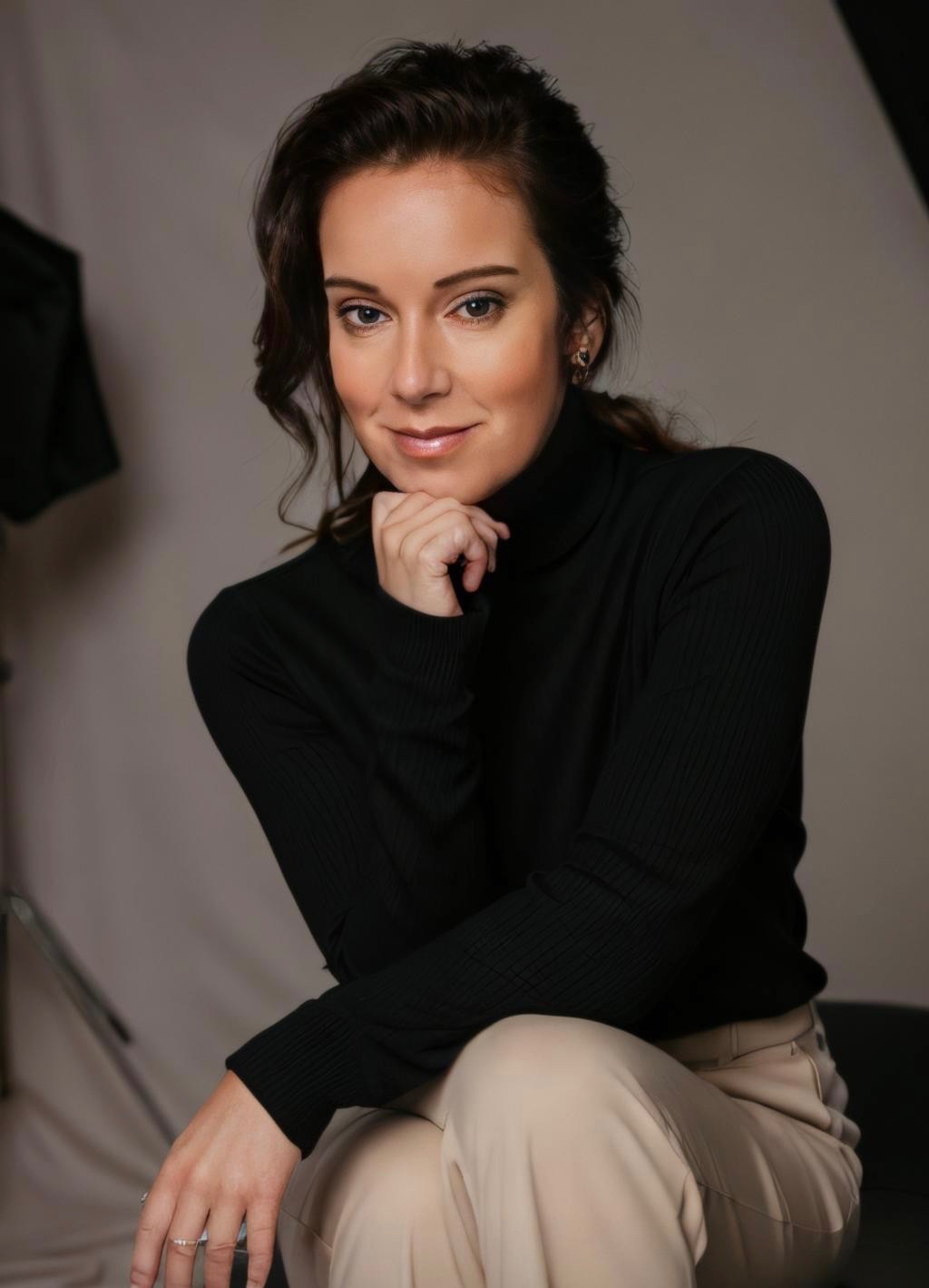
Portrait of Ali Ainsworth

About Alison

Designing pathways to work, grounded in real life.

Alison Ainsworth is a strategist, venture creator, and community builder who designs pathways to work for individuals with disabilities — creating viable, income-generating opportunities built around strengths, interests, and the realities of everyday life.

Her work is grounded in over two decades of lived and applied experience at the intersection of family, disability, and community. She is known for identifying gaps where traditional approaches fall short, and for designing practical, human-centered solutions that connect individuals, families, community, and local business in ways that can be sustained over time.

As a venture creator, Alison founded Wags Cookies Ltd. — a purpose-driven business that grew from a home-based idea into a recognized brand reaching national and international audiences, including selection for the official GRAMMY Awards® gift bags in 2023. Wags Cookies was later acquired with an explicit inclusion mandate, carrying the original purpose forward under new ownership while preserving the work it created.

She is also the founder of Sweet Freeze, a mobile, community-based venture designed around connection, visibility, and flexibility — meaningful participation through simple, public-facing work that meets people where they are. Alongside these operating ventures, Alison continues to develop new concepts (Revive Pick Up Co., Rural DeliverEase, and others) as templates other communities can adapt.

Beyond her ventures, Alison brings extensive experience in community building, fund development, and cross-sector collaboration. She has raised and stewarded significant funding across nonprofit and public initiatives, worked alongside municipal, provincial, and federal programs, and partnered with community organizations to strengthen capacity and engagement. She has served in nonprofit leadership and contributed to public dialogue on disability and inclusion at local, national, and international levels.

Her perspective is grounded in lived experience and extended through applied, real-world implementation. She is recognized for her ability to see what is possible, build from what is already present, and bring the right people together to make it real.

Her work is not theoretical. It is designed, tested, and sustained in practice.

The work

What Alison actually does.

The work is the design and development of real pathways to work for individuals with disabilities — built from a detailed understanding of the individual, including their strengths, patterns, variability, and the conditions that shape how they can reliably participate.

From there, the process extends outward into the environments where life is already happening.

It involves a deliberate assessment of the individual's natural ecosystem — relationships, routines, community spaces, and local businesses — to identify unmet needs, overlooked openings, and points where value can be created. The focus is on uncovering opportunity that already exists but has not yet been defined or activated.

This is not a conceptual strengths exercise. It is a practical, structured process of translating lived capacity into viable, income-generating work.

The resulting pathways take different forms. In some cases, they develop into small, entrepreneurial ventures. In others, they become customized roles, services, or community-based opportunities. The form is not predetermined — it is shaped by alignment.

The objective is clear: to create work that reflects the individual, functions in real conditions, and can be sustained over time — contributing not only to participation, but to income, stability, and a stronger sense of contribution.

Alison works at the intersection of individuals, families, community, and business — connecting these layers in practical ways to move from potential to participation, and from participation to viable work.

She is available to speak at conferences, lead workshops, and contribute to panels and working sessions that help families, service providers, community leaders, and businesses move beyond intention and into the active design and development of pathways to work.

How the work moves

Four principles that shape every pathway.

01

Start with the person

Strengths, interests, and the realities of everyday life come first — long before any conversation about format, role, or system.

02

Design for fit, not predictability

Real pathways are shaped around how a life actually operates, not around fixed schedules or assumed capacity.

03

Identify the natural network already there

Sustainable work depends on connection — families, community, and local businesses are already part of the picture; the work is recognizing and activating that network.

04

Stay practical

Concepts are only useful if they can be understood, applied, and carried forward by others. The work is real-world by design.

Personal foundation

The work began at home.

Alison and her family have spent more than two decades raising an adult daughter living with complex medical and developmental challenges since birth. Every part of this work — the pathways, the ventures, the methodology — is shaped by what that life has actually required.

The family has navigated nearly every transition a journey like this asks of a household: early intervention, rural school inclusion, complex systems and funding, advocacy in spaces that had no template, and now adult life in a supported living environment. They were among the first families in their region to integrate a service dog into rural school and community life — a ten-year partnership that opened doors and changed expectations for what inclusion could look like.

The trailblazing was never the point. The life was. The methodology came from doing the work — over and over, in real conditions, without a map.

That experience now extends outward — to the families, service providers, community leaders, and businesses doing the same work in their own contexts, looking for a practical, real-world way to begin.

Featured

Larry King Live · service dog awareness segment · national broadcast

Cross-sector experience

Two decades across the systems work has to move through.

20+ years
Lived & applied experience at the intersection of family, disability, and community
Public · Private · Nonprofit
Cross-sector initiatives across municipal, provincial, and federal programs
Operating ventures
Wags Cookies Ltd. (acquired) and Sweet Freeze — built, run, and sustained in real environments
International reach
Including selection for the official GRAMMY Awards® gift bags, 2023

Selected ventures

Applied work, real-world pathways.

01
Wags Cookies Ltd. logo

Wags Cookies Ltd.

Founder · Acquired with an inclusion mandate

What began as a genuine interest in dogs and baking became a recognized venture creating real work, visibility, and income — later acquired with an inclusion mandate that carried the original purpose forward.

02
Sweet Freeze logo

Sweet Freeze

Founder · Mobile, community-based

A mobile, community-based venture designed around connection, visibility, and flexibility — meaningful participation through simple, public-facing work that meets people where they are.

03

Concept development

Revive Pick Up Co. · Rural DeliverEase

Additional concepts that demonstrate how pathways to work can be identified, shaped, and designed from real needs and individual strengths — practical templates others can adapt.

Core idea

"Work does not need to be found. It can be built."

Start with the person. Build from there.